



The Trump administration’s attack on Huawei has been opposed by its own country. On the one hand, Google is worried about Huawei’s self-sufficiency, moving out of “national security risk” to remove the sales ban on Huawei from the United States; on the other hand, senior White House officials have also called for restrictions on the US government’s business dealings with Huawei, preferably extended.
According to the Wall Street Journal local time on June 9, Russell T. Vought, acting director of the White House Administration and Budget Bureau, hopes to postpone the implementation of the key legal provisions restricting the US government’s business dealings with Huawei, on the grounds that this will overburden US companies using Huawei technology.
On June 4, Walter wrote a letter to the US Vice President, Burns, and nine members of Congress. The Wall Street Journal received a copy of the letter.
What Walter wants to postpone is the 2019 National Defense Authorization Act (NDAA) signed by Trump on August 13, last year, which claims to be the “most radical” new law in the US in recent years, including one: prohibit government agencies and their contractors from purchasing equipment from ZTE, Huawei and a number of other Chinese companies.

Screenshot of the US 2019 National Defense Authorization Act
In his letter, Walter said that the provisions of the above-mentioned bill may result in a “substantial reduction” in the number of companies that can supply government demand, and will have a disproportionate impact on US companies that rely on federal grants and are located in rural areas because Huawei device is very popular.
The letter requires restrictions on contractors and federal loan and grant beneficiaries to take effect four years after the law is passed, rather than within the current two years, so that affected companies have time to make adjustments and provide feedback.
The report quoted the Waters letter as saying, “Although the government recognizes the importance of these bans to national security, many agencies have heard significant concerns from a number of potential stakeholders who are subject to written regulations.”
In addition, the letter stated that “the rural federal grant recipients may be affected by the disproportionate impact of the ban”.
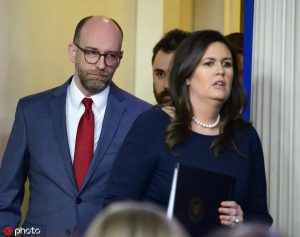
Water (left) / IC Photo
The report said that a Huawei spokesperson declined to comment. A spokesperson for the White House Budget Management Office did not comment on this. In addition, the representatives of Burns and the members of the congressional parliament, including the House Speaker Pelosi, did not immediately respond to requests for comment.
However, the Wall Street Journal believes that the opposition of a senior US government official indicates that it is difficult to quickly suspend business between Huawei and Huawei. And if the bill is postponed, it will become Huawei’s “probation.”
Recently, the Trump administration has been targeting Huawei for the so-called “national security.” In addition to the above-mentioned last year’s bill for Huawei’s business, last month, the US Department of Commerce also listed Huawei as a “list of entities” for sale.
Last year’s National Defense Authorization Act was a tipping point for the US action against Huawei. In March, Huawei filed a lawsuit against the US government for sales restrictions on the company. On May 28, Huawei filed a summary judgment motion in the Eastern District of Texas, requesting the court to declare the US “Finance and Defense Authorization Act of 2019” (2019 NDAA) unconstitutional.
The United States has not yet formally responded to the case.
This is not the only warning that the Trump administration received after it announced its suppression of Huawei.
According to previous reports, after the US government listed Huawei as an “entity list,” Google announced that it would suspend Huawei’s update of Android, but Huawei emphasized its ability to continue to develop and use the Android ecosystem.
The “blocking” of the United States has accelerated the pace of Huawei’s self-sufficiency, which has made Google a little anxious.
The British “Financial Times” reported on June 7 that Google has issued a warning to the Trump administration on the “Huawei ban”. The reason they woven is that if Huawei develops its own version of the Android operating system, it will be “more vulnerable to be attacked by hackers”, “damaging US national security.”
Some analysts believe that due to the open source nature of Android, Google’s move to terminate Huawei’s update may prompt Huawei to develop an Android-based operating system that does not include Google applications and services, or even develop a new operating system to establish its own software application ecosystem and promote it globally.
