


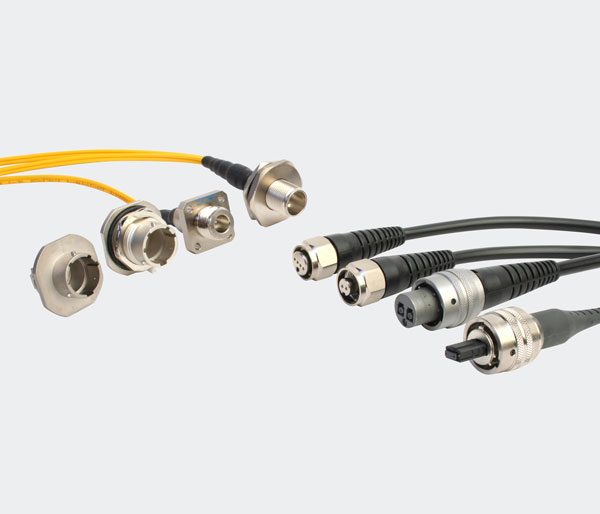
Recently, Ren Zhengfei was interviewed at the Huawei Park in Shenzhen. He said that Huawei has cut down some unimportant edge products and gathered these forces on the main channel to become the main products. Recently, Huawei wants to sell the submarine cable business. It seems that the submarine cable is what Ren Zhengfei said as “unimportant edge products”.
Huawei is still working on the submarine cable business
On August 29, according to foreign media reports, Huawei said that the company was “very interested” to participate in the construction of the first submarine cable between South America and Asia.
Dou Yong, general manager of Huawei Chile, said that the company is eagerly paying attention to the open tender project initiated by Chile in July and will be invited to participate in the bidding for the trans-Pacific cable project during the tender.
In an interview, Dou Yong said: “Huawei is very interested in participating in this commercial project. The bidding process is divided into several steps, we have already prepared for this, and will follow this process until the supplier is selected to implement the project. We will definitely participate in the bidding.”
The previous day, Huawei won the bid for China Mobile Hainan-Hong Kong International Submarine Cable Project Procurement (general contracting part).
Several submarine cable projects, Huawei are highly valued and focused on participation, which seems to be inconsistent with Huawei’s recent sale of submarine cable business.
Is Huawei’s submarine cable business important?
Earlier on June 3, A-share listed company Hengtong Optoelectronics announced that it was planning to purchase a 51% stake in Huawei Ocean Network Co., Ltd. held by Huawei Technology Investment Co., Ltd. through the issuance of shares and payment of cash.
According to public information, Huawei Ocean is the world’s fourth largest submarine cable engineering company, mainly responsible for cable laying and maintenance. Among them, Huawei Investment holds 51%, and Y National Enterprise Global Maritime System Co., Ltd. holds 49%.
Huawei’s total sales revenue in 2012 was 721.2 billion yuan; net profit was 59.3 billion yuan. Among them, consumer business sales revenue was 348.9 billion yuan, up 45.1% year-on-year, operator business sales revenue was 294 billion yuan, down 1.3% year-on-year; corporate business sales revenue was 74.4 billion yuan, up 23.8% year-on-year. The revenue share of Huawei’s submarine cable business is certainly not high.
Huawei’s strategic thought: focusing on the main channel
The operator’s financial network was informed that Huawei’s strategic guiding ideology is: focusing on the main channel, doing something different, only doing what you are best at, only entering the field of highest added value. There is even a proper term inside Huawei: the main channel. Huawei’s business focus is to focus on the main channel.
Ren Zhengfei has repeatedly described the main channel from a broader perspective:
In 2012, Ren Zhengfei said in a speech at the Sanya Terminal Strategy Retreat: “What is the main channel? Everything in the world has a normal distribution. We only do the middle part of the normal distribution, and nothing else. If we say that the place is very profitable, we will not do it, and we will not be able to sell it. We will go on the main channel and the main trend, and there will be opportunities for victory with traffic.”
In 2014, Ren Zhengfei also mentioned in the minutes of the Brazilian representative office and the Pakistani supply center. “What is the main channel? It is difficult for others to replace it, and the large number of copies can be called the main channel.”
The question involved is whether the submarine cable business is Huawei’s main channel?
On the afternoon of June 17 this year, Ren Zhengfei once said, “We will not separate or sell other businesses (other than submarine cables) in the future.”
For the recent outbreak of Huawei’s 51% stake in Huawei’s sea-going cable joint venture, Huawei’s Ocean, Ren Zhengfei explained that the sale of the submarine cable business was not decided recently, but rather the intention to sell it long ago. Secondly, the reason for the sale was not because of business failure. In fact, these businesses have achieved great success, and they decided to sell only because they are not in the core business of Huawei.
This shows that Huawei is the first to sell the submarine cable business, and the submarine cable business is definitely not the main channel of Huawei.
Cutting off non-strategic opportunities for marginal products does not consume strategic competitiveness
In this regard, Ren Zhengfei believed that it was this incident that helped Huawei cut down some unimportant marginal products.
In 2014, at the speech of the first session of the Ren Zhengfei Solution Reloading Brigade, he said: “We can’t consume the strategic competitiveness of the company on non-strategic opportunities. If we can’t do business with non-strategic roadmaps, we can’t do it. We can’t do it. Less than anything can satisfy the needs of customers. But the middle interface should be gradually open, so that companies that can do it come in.”
At present, Huawei sells some of the submarine cable communication network assets, and the purchaser is Hengtong Optoelectronics. Hengtong Optoelectronics also announced that the company is planning to purchase a 51% stake in Huawei Ocean Network (Hong Kong) Co., Ltd. held by Huawei Technology Investment Co., Ltd. through the issuance of shares and payment of cash.
Strategic ability must focus on the main channel
“We need to put the strategic competence center in the focus of strategic resources. Large companies should dare to use intensive investment, shorten the catch-up time and extend the time window of opportunity opening.” In 2015, Ren Zhengfei said.
At present, Huawei’s core competitiveness is mainly 5G and related products. Neil McRae, chief architect of BT, also said in public that “there is only one true 5G supplier, which is Huawei. Other suppliers should learn from Huawei.”
Up to now, Huawei has acquired more than 50 5G commercial contracts and shipped more than 150,000 stations.
Not long ago, Huawei released the world’s first commercial mobile 5G chip Kirin 990, the world’s first mobile terminal chip with more than 10 billion transistors, and integrated 5G baseband chip Baron 5000, 5G network can be realized without external 5G chip. Both SA/NSA 5G networking modes are supported.
Nowadays, Huawei’s leading position in the global 5G technology development field relies on focusing and refocusing. Moreover, Huawei will not change its current direction and will not enter unfamiliar areas. Perhaps this is Huawei.
