


At this week’s Open Computing Project (OCP) Summit, a recurring topic was the dramatic increase in East-West traffic of the data center. To cope with this situation, hyperscale data center operators are planning an evolution from 100 GbE to 400 GbE. In order to deal with east-west traffic issues in the short term, Facebook created a distributed network system called Fabric Aggregator.

Fabric Aggregator is a distributed network system based on the existing Facebook Wedge 100 switch simple building block and Open Switching System (FBOSS) software to adapt to the rapid growth of social media giants. This distributed network system enables data center operators to adapt to larger areas and different traffic patterns while providing flexibility for future growth.
Facebook software engineering director Omar Baldonado said that Facebook’s external traffic is dwarfed by its internal east-west traffic. The social giant’s traffic, whether east-west or north-south, is handled by the network aggregation layer, but traffic growth is on port density. And pressure on the capacity of each node.
Facebook’s technical product manager Sree Sankar said that Facebook’s east-west traffic has increased dramatically, requiring at least three times the capacity. Even if the largest switch has been used, it still can’t solve the problem of east-west traffic. There is an urgent need for a system within energy efficiency and flexibility.
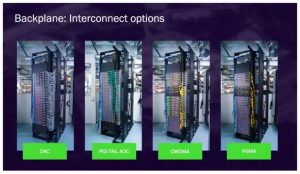
To keep up with traffic growth, Facebook designed Fabric Aggregator as a replacement for a common network chassis. It stacks multiple Wedge 100S switches, the same as the switches Facebook has used. Then run the Facebook Open Exchange System (FBOSS). The company developed four backplane wiring patterns to simulate the classic backplane, and the specifications for all backplane options have been submitted to the OCP.
Fabric Aggregator runs Border Gateway Protocol (BGP) between all sub-switches without a centralized controller. Each sub-switch operates independently, sends and receives traffic without any interaction or dependency on other sub-switches in the node. In this way, Facebook can rapidly expand capacity and replace building blocks and cable assemblies as demand changes.
Ree Sankar said: “Fabric Aggregator’s main design standard is flexibility. In the past nine months, Facebook has deployed this distributed network system in the data center, which redefines how Facebook handles network capacity.”
Facebook engineers described Fabric Aggregator in detail in a blog post. They submitted the specifications for all backplane options to OCP to continue their sharing tradition. Facebook’s network contribution to OCP includes its Wedge switches and Edge Fabric flow control systems.
Seven years ago, Facebook pioneered the creation of open computing projects with a focus on open data center components such as racks and servers. OCP CEO Rocky Bullock said that OCP currently has more than 4,000 engineers involved in its various projects and more than 370 specifications and design packages, and attracted about 3,000 attendees.
