


A three-and-a-half-hour flight from Beijing to Shenzhen is enough for reporters to read an American trap. The book tells of a “hunting” event – Alstom, a commercial giant that once spanned the global power, energy and transportation industry, was “dismembered” by Americans. Some commentators said that this book reveals a new form of global economic warfare in the United States. Alstom’s experience five years ago seems to be somewhat similar to the dilemma that Huawei is facing today. What is happening to Huawei, which is now being hit by the United States? Huawei’s founder Ren Zhengfei’s performance on the 21st and the Huawei production line may reveal some information.
“We are also riddled with holes now.
Strive to fly back soon”
On the 21st, Huawei founder Ren Zhengfei was interviewed by domestic media at Huawei’s Shenzhen headquarters. But before Huanhuan (ID:huanqiu-com) entered Huawei, the United States is constantly putting pressure on Huawei. The outside world is worried that Huawei may already be in the realm of “the mountains and rains are coming to the wind.”
On the 15th, US President Trump signed an executive order prohibiting US companies from using communications equipment made by companies that pose a risk to national security. At the same time, the US Department of Commerce’s Bureau of Industry and Security (BIS) announced that it would include Huawei in the so-called “entity list”, requiring any US company that sells products to Huawei to obtain a special license. Some American media analysts said that the US government blocked Huawei from “buying and selling”.
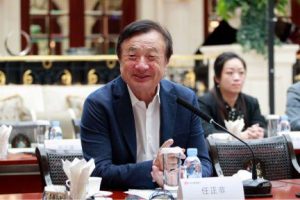
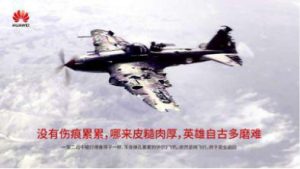
But in today’s interview, Ren Zhengfei’s status and attitude seem to be able to dispel this fear. From entering the interview hall to the end of the interview for two and a half hours, Ren Zhengfei has been answering questions with a spirited, calm and open manner. Worried that the reporters at the scene were nervous, he also comforted the reporters to “relax”. Before the official interview began, Ren Zhengfei told everyone about a story behind the “warplane” map with special meaning to Huawei.
According to Ren Zhengfei, this is a Il 2 aircraft that was played like a sieve in World War II. It was still flying and finally returned safely. “We are also riddled with holes now. We are flying while repairing the plane and fighting to fly back,” he said.
“We have conflicts with the United States,
But in the end, we still have to contribute to humanity together.”
In the face of the pressure from the United States, in contrast, Ren Zhengfei has an unusual calm and assurance.
A few hours before Ren Zhengfei was interviewed by the media, the US Department of Commerce announced that the ban on Huawei was postponed for 90 days. In this regard, Ren Zhengfei said that the most important thing for us is to do what we can do. What the US government does is not something we can do. Not only that, he also expressed his gratitude to American companies for their cooperation with Huawei over the years. They believe that Huawei’s confiscation is driven by American politicians and does not matter what American companies do. He also praised Apple products and said that Huawei’s 5G technology capabilities will never be affected by sanctions.
On the same day, when talking about the relationship between “patriotism” and “using Huawei”, Ren Zhengfei said that it cannot be said that Huawei products are patriotic, and that it is not patriotic. “Huawei is only a commodity. If you like it, you use it. If not, just don’t use it. Don’t tie this and politics.” He also said that we should not incite national sentiment and cannot equate the purchase of Huawei with patriotism.
When asked about the chip, Ren Zhengfei said that Huawei would not easily narrowly exclude US chips. Although Huawei’s own chips cost low, Huawei still needs to buy US chips. “We can’t isolate ourselves from the world, but grow together”.
“We have conflicts with the United States, but in the end we have to work together for humanity,” he added.
Viewing Huawei and Europe from “European town”
Huawei’s “European town” is not in Europe, but hidden in the southern Chinese city of Dongguan Songshan Lake. This “most globalized” place of Huawei is a new office base integrating R&D, administration and conference functions. The crimson train connects 12 different styles of European classic towns in the towns of Oxford, Heidelberg and Paris. From the station in Paris, you can walk around in 30 minutes.
Huawei’s “European town” scene
After more than a year of operation, this “European town” has become a key landmark for Huawei. The European market, far from the other end of the Eurasian continent, is especially critical for Huawei’s struggle for the global market. As Trump continued to exert pressure, his European allies gradually clarified their ideas and found a way to compromise. They would not blindly block Huawei from the United States, but would increase their focus on cybersecurity. The United Kingdom, France and Germany, which are the “three carriages” in Europe, basically accepted Huawei’s attitude and almost cleared the way for Huawei to enter the European market.
Huawei’s “European town” scene
But if the United States continues toughly demand that its allies close the door to Huawei, will Europe compromise? In this regard, when accepting the question of the ring, Ren Zhengfei said “confidently” that each country has its own interests, and the United States will not have such a powerful force to call everyone to follow it.
“We are producing the best mobile phones in the world every day”
At Huawei’s “home” – Huawei’s terminal intelligent manufacturing factory in Songshan Lake, Dongguan, the ring really feels where Huawei’s confidence comes from.
Huawei smartphone production line
Walking into the factory floor, the slogan “We are producing the best mobile phones in the world every day” is affixed to the front of the factory entrance, ensuring that everyone who enters the factory can see at first glance. It is understood that Huawei’s latest model P30 mobile phone is being produced in order at the factory.
According to reports, the Huawei P30 production line is a fully automated production line with a length of 120 meters. It is divided into five parts: surface mount, main board test, complete machine assembly, complete machine test and packaging. Except for the whole machine aging test, all processes need only 2 hours to be completed in. Most of the operations on this line were done by robots, and only 10 production personnel assisted in the operation. In addition to a few devices such as robots and dispensers, most of the equipment in this production line comes from Huawei’s own brand.
When asked about the impact of the recent US blockade ban on Huawei’s mobile phone production, a production line official told reporters that the US P30 mobile phone uses few US components. “The production line has not had much impact. In the future, we will be confident.”
In addition to the fact that the components used in Huawei’s mobile phones are rarely dependent on US imports, the self-developed chips are another “sharp weapon” for Huawei to cope with the US heavy pressure. When talking about the bottom of the self-developed chip, Ren Zhengfei said that Huawei has at least 700 mathematicians, more than 800 physicists, more than 120 chemists, six or seven thousand basic research experts, and more than 60,000 senior engineers, engineers, forming this combination is moving forward.
Ren Zhengfei also said that the scientists and experts of more than 15,000 basic research we have compiled are turning money into knowledge. We have more than 60,000 application talents to develop products and turn knowledge into money. “We have always supported scientists outside the enterprise to do exploration.”
He also said frankly, “Huawei is hard to make chips himself, but he has been determined to do it for so many years and slowly went through.”
