


On September 23, 2019, world premiere data center network developed by Alibaba and based on the of 400G DR4 optical modules silicon-light technology for the next-generation. And the first on-site exhibition will be held at the Hangzhou Yunqi Conference on the 25th and 27th. It is another important technological development and milestone in the field of optical interconnection after the full deployment of 40G and 100G self-developing optical modules in 2016 and 2017. Compared with the current 100G optical module, the network speed will be increased by four times. This technology will lay the foundation for the next generation of optoelectronic integration of Alibaba’s infrastructure. It is expected to be put into use in Ali’s global data center in the second half of 2020 and gradually provide services to Alibaba Cloud’s global cloud computing customers.
The rapid development and widespread application of cloud computing and big data place high demands on data center networks and optical interconnect technologies. From the perspective of the industry, the data center network traffic is basically doubled every two years, and the optical module technology is updated every 3-4 years. At present, 100G optical modules are widely used in data center networks. 400G optical modules will begin to be deployed on a large scale next year. It is expected that the speed of optical modules will reach 1T or more after 4 or 5 years.
How to greatly increase the optical module speed and meet the demand for cloud computing and big data for large-bandwidth data transmission while maintaining the same cost, power consumption and size, is the key to sustainable optical interconnection technology, and is a big challenge the field of optical technology. Silicon light integration is a key technology to address this challenge.
This technology dramatically reduces the size of optical modules and simplifies the design and production of optical modules by integrating a large number of optical components onto a single silicon optical chip; it utilizes existing integrated circuit manufacturing processes and technologies to achieve wafer-scale testing and encapsulation to significantly reduce the production cost of silicon optical chips; it reduces signal transmission damage and reduces signal processing power consumption by integrating a large number of optical devices. Since silicon light integration and CMOS integrated circuits use the same materials and production processes, silicon light technology can be combined with integrated circuit technology to finally achieve integrated integration of optical and electrical chips to achieve mutual light between chips and chips. Connected to solve the power chip interface (I / O) bandwidth bottleneck problem.
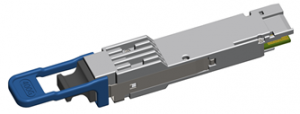
Figure 1. Alibaba Silicon Light 400G QSFP-DD DR4 Optical Module Outline Drawing
Alibaba’s silicon 400G DR4 optical module is packaged in a QSFP-DD package that provides up to four times the bandwidth density of today’s 100G optical modules.
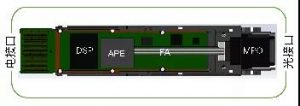
Figure 2. Internal structure of Alibaba Silicon Light 400G QSFP-DD DR4 Optical Module
As far as the internal structure of the optical module is concerned, the whole module consists of three parts: digital signal processing chip DSP, Alibaba Photonics Engine, fiber array FA and connector MPO. The APE package integrates virtually all of the optoelectronic conversion devices, greatly simplifying the design and production of the module. The DR4 optical module will be used to connect switches and switches in the Alibaba data center network up to 1 km.
Alibaba’s infrastructure has been in the field of silicon light in recent years. Through the in-depth cooperation and joint technical research with Elenion and Hisense Broadband, which are experienced in the industry, the design, packaging and testing of silicon optical chips have been completed, packaging, production, testing the entire industry chain. The successful development of the silicon light 400G DR4 optical module is the result of long-term technical investment and accumulation of Alibaba, and also opens the cornerstone of the common progress of industrial ecology.
