



US technology giant Google is actively lobbying for the US government to waive its Android operating system ban on Huawei, allowing the company to continue to do business with Huawei.
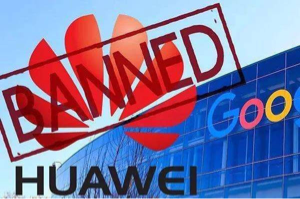
According to the British Financial Times reported on June 7, three people familiar with the lobbying conversation revealed the news.
A person who knows the lobbying conversation said: “Google has been arguing to US officials that if they prevent them from doing business with Huawei, the United States will fall into the risk of having two Android operating systems, one is Google’s native version, and the other is a hybrid version of Huawei.”
According to the above report, Google is particularly worried that if Android is not allowed to update on Huawei phones, it will prompt Huawei to develop its own version of Android software.
Previously, in response to the US government ban, Huawei once stated that Android, as a smartphone operating system, has always been open source. Huawei has the ability to continue to develop and use the Android ecosystem.
Huawei has been developing its own mobile operating system, which has also been confirmed.
On May 21, Yu Chengdong, head of Huawei’s consumer business, said that Huawei’s operating system will be available soon this fall and at the latest next spring, and will be fully compatible with Android and Web applications. On May 23, the website of the State Intellectual Property and Trademark Office showed that the “Huawei Hongmeng” trademark applied by Huawei Company had been approved for registration, which was regarded as a precursor to Huawei’s self-developed operating system (OS).
Regarding Hongmeng system, Huawei founder Ren Zhengfei said in an interview with the media on May 21 that Huawei can do the operating system, but it is not necessarily a substitute for others. “Because we are needed in the artificial intelligence and the Internet, but in the end we don’t know which ones are used and which ones are useless.”
It’s not just Google that tries to find a waiver for Huawei.
According to the aforementioned Financial Times report, people familiar with the matter said that in the past few weeks, Google executives have contacted the US Department of Commerce to seek extension or exemption from the ban. In the process, other major US chip manufacturers have also joined in, including Qualcomm. These chip makers worry that the ban will affect their business.
Google said: “Like other US companies, we are working with the US Department of Commerce to ensure that we fully comply with its requirements, including temporary licenses. Our focus is on protecting Google users on millions of Huawei phones in the US and around the world. Security.”
A US Department of Commerce official said that the Bureau of Industry and Security regularly responds to “inquiries from the company on the scope of supervision” to “ensure that private companies comply with export controls.” The government is not new, and these discussions will not affect law enforcement.”
The US Department of Commerce said on May 15 that it will include the Chinese company Huawei and its 70 subsidiaries in the control “entity list.” In this regard, Huawei’s rotating chairman Hu Houkun wrote in a letter to the employee inside Huawei that the US Department of Commerce’s Bureau of Industry and Security (BIS) included Huawei in the so-called “entity list”, which means that US companies are not allowed to supply Huawei without the permission of the US government.
In this regard, Google Android said that it is to ensure that the existing Huawei devices, such as Google Play Store (Google Play Protect), provide network security through Google Play Protect, while complying with all requirements of the US government. The service will continue to run.
Huawei said that Android, as a smartphone operating system, has always been open source. Huawei has the ability to continue to develop and use the Android ecosystem.
